Generac Generator Cranks but Won’t Start: Fuel-Solenoid Diagnosis
When a Generac generator cranks but won’t start, the problem may involve fuel delivery even when the electrical tests initially look normal. During a recent field diagnosis, we inspected a natural-gas Generac standby generator that cranked normally but would not start. The battery was new, the generator had good spark, and voltage was reaching the […]
October 16, 2026
When a Generac generator cranks but won’t start, the problem may involve fuel delivery even when the electrical tests initially look normal. During a recent field diagnosis, we inspected a natural-gas Generac standby generator that cranked normally but would not start. The battery was new, the generator had good spark, and voltage was reaching the fuel solenoid—but the engine still would not run.
What the Generac Generator Was Doing
The standby generator completed the cranking portion of its start sequence, but the engine never started. Because the starter was turning the engine normally, the first step was to separate a cranking problem from an ignition or fuel-delivery problem.
A weak battery can cause slow cranking, unstable controller voltage, or incomplete operation of fuel-system components. In this case, however, the battery had already been replaced and the engine was cranking at a normal speed.
Checking Spark and the Starting Circuit
Testing confirmed that the generator had good spark. That finding made a complete ignition failure less likely and shifted attention toward the fuel system and the components responsible for allowing natural gas to reach the engine during the start sequence.
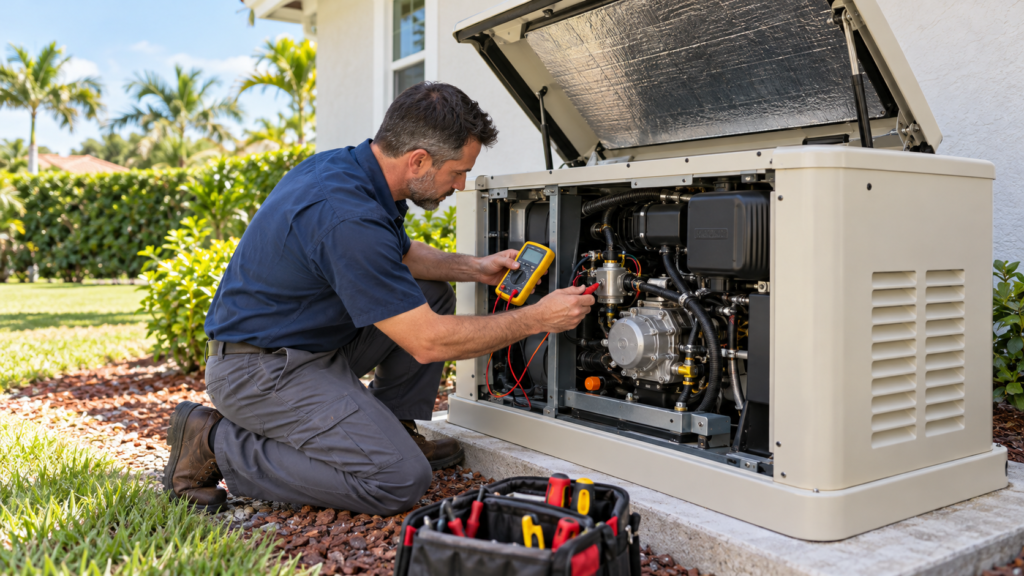
The fuel-solenoid circuit was then tested. We measured 11.92 volts DC across the fuel-solenoid wires while the generator was being commanded to start. This showed that the control circuit was supplying approximately battery voltage to the solenoid.
Fuel-Solenoid Resistance Test
The fuel-solenoid coil measured 15.7 ohms. That reading showed the coil was not obviously open, but resistance alone cannot prove that a solenoid is moving properly. Specifications can also vary by generator model and solenoid design, so readings should always be evaluated with the correct service information.
An electrical coil can show continuity and still have a mechanical problem. The internal plunger may stick, a connection may be intermittent, or the solenoid may fail to open consistently when energized.
Why the Generator Would Crank but Not Start
After the electrical checks, the solenoid was tapped lightly and its wire connections were disconnected and reconnected. The generator then started and operated.
This response strongly suggested a sticking or intermittent fuel solenoid or an unreliable electrical connection. Tapping the solenoid was diagnostic evidence—it was not a permanent repair. A component that starts working after it is disturbed may fail again, especially when the generator sits unused between weekly exercise cycles or outages.
The test results also demonstrate why generator troubleshooting cannot rely on only one meter reading. The solenoid had voltage, and its coil had measurable resistance, but the fuel-control mechanism was not operating reliably until it was physically disturbed.
What a Qualified Generator Technician Should Check
When a Generac generator cranks but won’t start, a complete diagnosis may include:
- Battery voltage and cranking speed
- Controller warnings and stored fault codes
- Ignition spark and spark-plug condition
- Fuel-solenoid voltage during the start command
- Fuel-solenoid resistance and connector condition
- Operation of the solenoid plunger or fuel valve
- Natural-gas or propane supply and pressure
- Regulator, demand valve, and fuel-line condition
- Air intake, filters, and engine compression when appropriate
The exact test sequence depends on the generator model and symptoms. A technician should avoid replacing parts until the starting circuit, ignition system, fuel controls, and connections have been tested.
Do Not Bypass Generator Safety Controls
Natural-gas and propane generators combine fuel, electricity, moving engine components, and automatic starting equipment. Do not bypass the fuel solenoid, jump safety circuits, or work inside the generator while automatic operation is enabled.
Testing should be performed by a qualified generator technician following the manufacturer’s procedures. Generac owners can also use the manufacturer’s official standby-generator service request page when appropriate.
Preventing Intermittent No-Start Problems
Weekly exercise cycles are useful, but they do not replace professional generator maintenance. Connections can loosen or corrode, fuel-control parts can begin sticking, and batteries can weaken even when the generator appears normal during a brief exercise cycle.
Annual service gives a technician an opportunity to inspect connections, test the battery and charging system, review fault history, check the fuel system, and verify that the generator starts and transfers properly. Customers who want scheduled maintenance and priority support can also review our PowerCare generator service plans.
Generac Generator Repair on the Treasure Coast
Treasure Coast Generators provides generator repair and diagnostics for homes, businesses, and commercial properties across Florida’s Treasure Coast. We service Generac systems as well as other major standby-generator brands.
If your generator cranks without starting, starts and shuts down, displays a fault code, or operates intermittently, avoid repeatedly forcing it through start attempts. Document the fault message and contact a technician before the next outage.
Learn more about our Generac generator service, or contact Treasure Coast Generators to schedule diagnosis and repair.
Field note by Rob Pellicci, owner and generator technician at Treasure Coast Generators. Rob is a U.S. Army veteran trained in power-generation equipment repair and has 12 years of experience with Caterpillar Electric Power Generation systems.
Ready to Schedule Generator Service?
Call us today or request a quote online. We serve Martin, St. Lucie, Palm Beach, Indian River, and Okeechobee Counties.
We respond the same business day. Emergency? Call directly.